
Starting with the country’s main football hotbeds, we will hop around Spain’s many diverse regions and bring you the lowdown on football in each one. These Spanish football regional guides feature info on all the major clubs, tips for getting around, advice on how to buy tickets and things to do away from the pitch.
The league listings on this page have been fully updated for the 2026/27 season and feature all the Spanish football clubs in the top three tiers – La Liga, the Segunda Division and the Primera Federacion, which is split into two 20-team regionalised leagues.
We also have a separate piece on the biggest Spanish football rivalries, which explores some of the most passionate local derbies and feistiest clashes around the country.
Football clubs in Spain – Regional guides
Madrid
Madrid is not just the capital of Spain, but it has been described as the capital of European football in recent years with Atleti rising to become a genuine continental force alongside neighbours and 15-time European champions Real Madrid, arguably the biggest club in world football. There’s plenty going on away from the big two though, with a trip to Vallecas to see barrio boys Rayo popular with visitors to the city, while you can also catch a game in the South Madrid commuter towns of Getafe, Leganes and Alcorcon.
The Madrid clubs
La Liga: Real Madrid, Atletico Madrid, Getafe, Rayo Vallecano
Segunda: Leganes
Primera Federacion: Alcorcon, Atletico Madrid B, Real Madrid B, Rayo Majadahonda

Catalunya
FC Barcelona may be the symbol of Catalan football and in many ways the symbol of Catalunya, but there are a host of smaller clubs in the region too. Girona stunned everyone with a third-place finish in La Liga 2023/24, but have since been relegated. In the suburbs of Barcelona, Sant Andreu and Europa contest a fierce local rivalry, while Espanyol are located on the fringes of the city.
The Catalan clubs
La Liga: Barcelona, Espanyol
Segunda: Girona, Sabadell
Primera Federacion: Gimnastic Tarragona, Europa, Sant Andreu

Basque Country
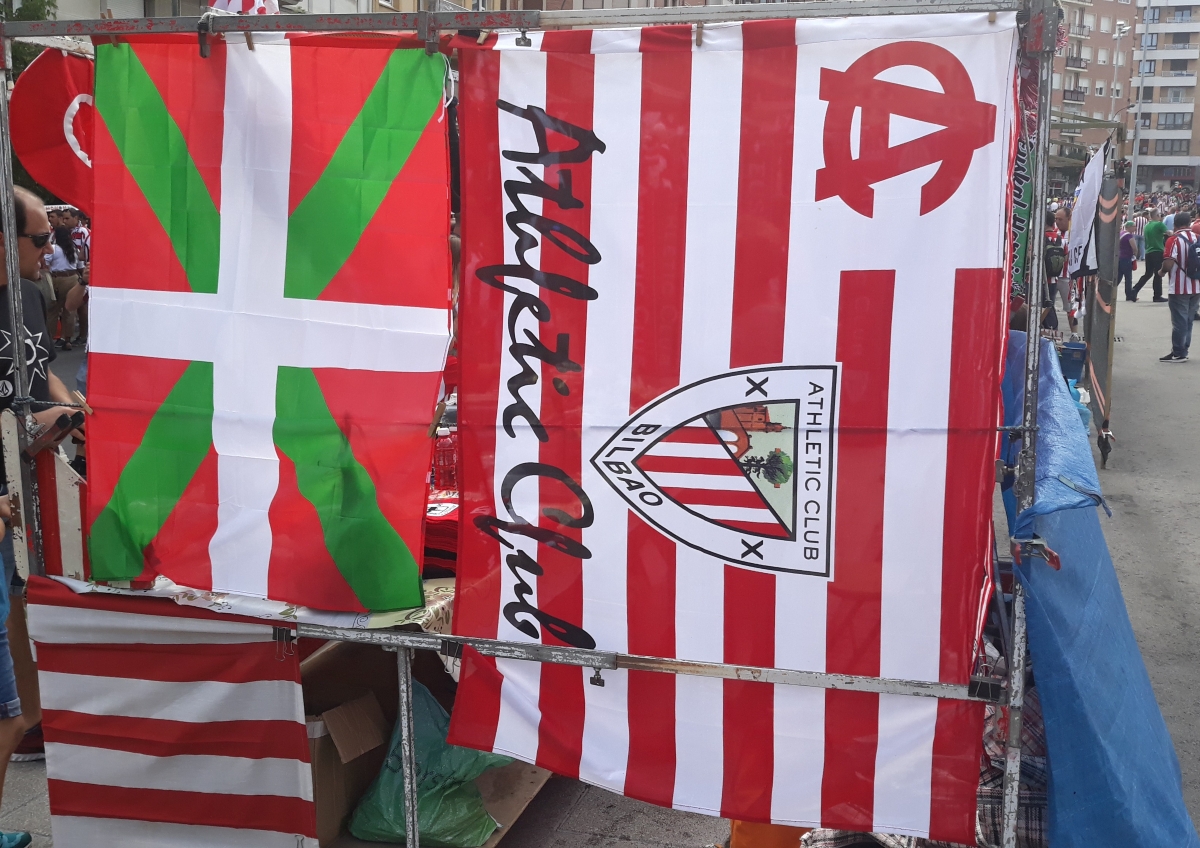
In many respects, the real birthplace of football in Spain, the Basque Country and its clubs were instrumental in the emergence of the sport in the early 20th Century. Despite occupying less than 1.5% of all Spanish territory, the tiny Basque autonomous region continues to punch well above its weight to this day with three clubs on the La Liga map, some of the best academies in Spain and a stubborn determination to continue doing things their own way.
The Basque clubs
La Liga: Athletic Club, Real Sociedad, Alaves
Segunda: Eibar, Real Sociedad B
Primera Federacion: Arenas, Barakaldo, Athletic Club B, Real Union

Andalusia
Spain’s most populous region is home to more clubs in the top three tiers than any other. The Andalusian capital hosts Spain’s fiercest city derby with Real Betis and Sevilla fighting to be the pride of Seville. Malaga are often viewed as the other “big” Andalusian club and they are now back in La Liga, after several years away. Cadiz, Granada and Almeria all suffered relegation from the top flight in 2024 and remain in the second tier, along with Cordoba.
The Andalusian clubs
La Liga: Real Betis, Sevilla, Malaga
Segunda: Almeria, Cadiz, Granada, Cordoba
Primera Federacion: Antequera, Algeciras, Juventud de Torremolinos, Jaen
Valencian Community
The Valencian Community is another major part of the Spanish football map. Valencia CF are the traditional main force, but Villarreal have risen to become a big player. Following the promotions of Levante and Elche in 2025, the Valencian region will again be home to 20% of the clubs in La Liga 2026/27, making this a great time to plan a football trip to this part of the country.
The Valencian clubs
La Liga: Valencia, Villarreal, Levante, Elche
Segunda: Castellon, Eldense
Primera Federacion: Hercules, Villarreal B

Galicia
Tucked away in the northwest corner of Spain, Galicia is a coastal region with a complex history, Celtic heritage and a unique relationship with the sea. The Galician Community is home to several football clubs that are located right on the coast, including beach-side Deportivo La Coruña, the only team from the region to have won a major trophy. They will again contest the Galician derby against Celta Vigo this season, following promotion to the top flight.
The Galician clubs
La Liga: Celta Vigo, Deportivo La Coruña
Segunda: Celta Vigo B
Primera Federacion: Racing Ferrol, Lugo, Pontevedra, UD Ourense, Deportivo La Coruña B
Asturias
This cider-loving region of northern Spain is home to all kinds of unique cultural quirks, as well as some of the most dramatic scenery in all of Iberia. Its two main cities (which are separated by just 30 km) enjoy a fierce rivalry on and off the pitch with Real Oviedo and Sporting Gijon battling it out for regional pride. The Asturian derby is back on the menu in the 2026/27 campaign, after Oviedo’s relegation from La Liga.
The Asturian clubs
La Liga: –
Segunda: Sporting Gijon, Real Oviedo
Primera Federacion: Real Aviles
Canary Islands
Known primarily as a winter sun holiday destination by those who don’t live there, many might be surprised by just how high football passions run in the Canary Islands. Las Palmas and Tenerife, the two biggest clubs, have a fierce rivalry and the islands have produced a whole host of talented footballers through the years, with more recent examples being David Silva, Pedro and Juan Carlos Valeron, as well as current Barcelona star Pedri.
The Canarian clubs
La Liga: –
Segunda: Las Palmas, Tenerife
Primera Federacion: –
Balearic Islands
The other major set of Spanish islands also has a relatively lively football scene with plenty of action to be found. RCD Mallorca may be top dogs but they aren’t the only team in the city of Palma. Although small, football is also starting to flourish on the Balearic party island of Ibiza, which hosted second-tier football for the first time in 2021/22.
The Balearic clubs
La Liga: –
Segunda: Mallorca
Primera Federacion: Ibiza
Castile & Leon
The historic region of Castile and Leon is the largest of Spain’s autonomous communities, covering a big chunk of the country in between Madrid and the northern regions. However, it’s sparsely populated and isn’t currently home to any top-flight clubs.
The clubs in Castile & Leon
La Liga: –
Segunda: Real Valladolid, Burgos
Primera Federacion: Ponferradina, Unionistas de Salamanca, Zamora, Mirandes, Cultural Leonesa
Navarre
The professional football scene in Navarre is centred solely around the city of Pamplona which is home to Osasuna. This small northern region which borders France is viewed by some as an extension of the Basque Country, although that is a hotly contested issue depending on who you speak to!
The Navarrese clubs
La Liga: Osasuna
Segunda: –
Primera Federacion: –
Cantabria
Located on the North Coast between the Basque Country and Asturias, the region of Cantabria is only home to one major football club and that’s Racing Santander. They have recently ended a 14-year absence from La Liga.
The Cantabrian clubs
La Liga: Racing Santander
Segunda: –
Primera Federacion: –
Aragon
Historically, Aragonese football has centred almost solely around Real Zaragoza, a regular fixture in the top flight for most of their history. However, they’re going through their worst-ever period, and were relegated to the third tier last term, along with regional rivals Huesca.
The Aragonese clubs
La Liga: –
Segunda: –
Primera Federacion: Teruel, Real Zaragoza, Huesca
Murcia
You also have to dive down to the Primera Federacion before you find any football action in the region of Murcia, with Cartagena relegated from the second tier in 2025. They’ll have derbies against Real Murcia and Aguilas to look forward to this term.
The Murcia clubs
La Liga: –
Segunda: –
Primera Federacion: Cartagena, Real Murcia, Aguilas
Castilla–La Mancha
Another large, but sparsely populated region that covers much of Central Spain, Castilla–La Mancha is only home to one club of any real size. That’s Albacete, who play in the Segunda Division. You can easily reach the city by high-speed rail on the line between Madrid and Alicante.
The Castilla–La Mancha clubs
La Liga: –
Segunda: Albacete
Primera Federacion: –
Extremadura
One of the most isolated parts of Spain, the region of Extremadura borders Portugal and is currently home to four clubs in the Primera Federacion. Cacereño are based in the picturesque town of Caceres, while A.D. Merida are located around an hour’s drive to the south. Extremadura and Coria join those clubs, after both won promotion from the fourth tier last term.
The Extremadura clubs
La Liga: –
Segunda: –
Primera Federacion: Cacereño, Merida, Extremadura, Coria
La Rioja
In the 2025/26 season, La Rioja was the only one of Spain’s 17 autonomous communities not represented in any of the top three tiers. That won’t be the case in the 2026/27 campaign, following the promotion of UD Logroñes, who are based in the city of Logroño.
La Rioja clubs
La Liga: –
Segunda: –
Primera Federacion: UD Logroñes
Other Spanish football teams
There are also two other clubs that will play in the Segunda Division in 2026/27 that you may struggle to locate on a Spanish football teams map.
The Principality of Andorra is a sovereign nation in the Pyrenees situated between Spain and France, but its main club FC Andorra has competed as part of the Spanish football pyramid for most of its history. Currently owned by former Barcelona defender Gerard Pique, they won promotion back to the second tier in 2025.
There is also Segunda Division football on the African continent. AD Ceuta won promotion in 2025 to reach the second tier for the first time since the 1960s. Ceuta is an autonomous city, but a formal part of Spain, located around 70 km by road from the Moroccan city of Tangier and just across the Strait of Gibraltar from the Andalusian port of Algeciras.
The other clubs
La Liga: –
Segunda: Andorra, Ceuta
Primera Federacion: –